Categories
Product Reviews (Customer)

Review – Sam Chan’s Wing Chun Wooden Dummy (Book)

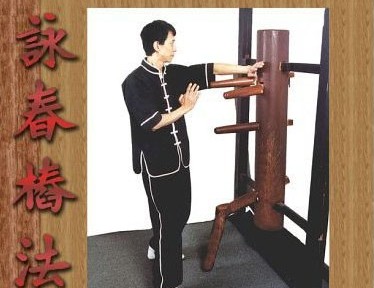
“Ok straight up, this is the best book that I have read on the subject of the Wing Chun Wooden Dummy. First off, Sifu Chan’s is one of the only books on this subject that isn’t 85% pictures and 15% written content. Quite the contrary — the written material in this book is very significant. This is a testament to the time and effort that Sifu Chan must have put into this work. That being said, the pictures themselves are very well done in that they are large enough, clear enough see, and taken at the proper angle so as to use as a study aid. But it is truly the written material that sets this book apart from the others on this subject. Sifu Chan really went all out in describing the wooden dummy techniques, applications, and variations in extensive detail. I highly recommend this book to every serious student of Wing Chun.”
Categories
Product Reviews (Customer)

Review – James Keating’s Comtech Trapping Vol.1 DVD

What It’s About:

James Keating’s methods on trapping techniques based on the Wing Chun system.

Comments:

In this DVD James Keating presents his trapping method, “advanced hand immobilization with high speed application.”  His presentation begins with a mini lecture complete with a whiteboard providing terminology to assist the novice in understanding the principles of trapping.

Categories
Product Reviews (Customer)

Review – James Keating’s Comtech Trapping Vol. 2 DVD

What It’s About:

This DVD is a continuation of James Keating’s methods on trapping techniques based on the Wing Chun system.

Categories
Product Reviews (Customer)

Review – James Keating’s Comtech Trapping Vol. 3 Ring Training

What It’s About:

James Keating demonstrates the use of auxiliary equipment in training for JKD and Wing Chun with some applications of Chi Sao and the Wooden Dummy or Mook Jong apparatus.

Categories
Product Reviews (Customer)

Review – James Keating’s Comtech Trapping Vol. 4 – Art of the Flow

What It’s About:

Presentation of trapping techniques related to James Keating’s, Lap Sao, and Hubud and Chi Sao offensive and defensive fighting matrix.

Comments:
Mr. Keating presents this DVD on trapping technique from the originals of Chinese Wing Chun and Philippine martial art forms. This would be considered a hallmark of JKD which blends different styles of fighting into one coherent system of defense. He starts off with presenting a blackboard filled with terms and linking arrows pointing to a list of techniques which are attributed to the family of movements such as Lap Sao, Hubud and Chi Sao training. He calls this a matrix. Much of this material was covered in his past DVDs, but this is a new way to look at it. He then goes into demonstrations and Chi Sao.

Categories
Product Reviews (Customer)

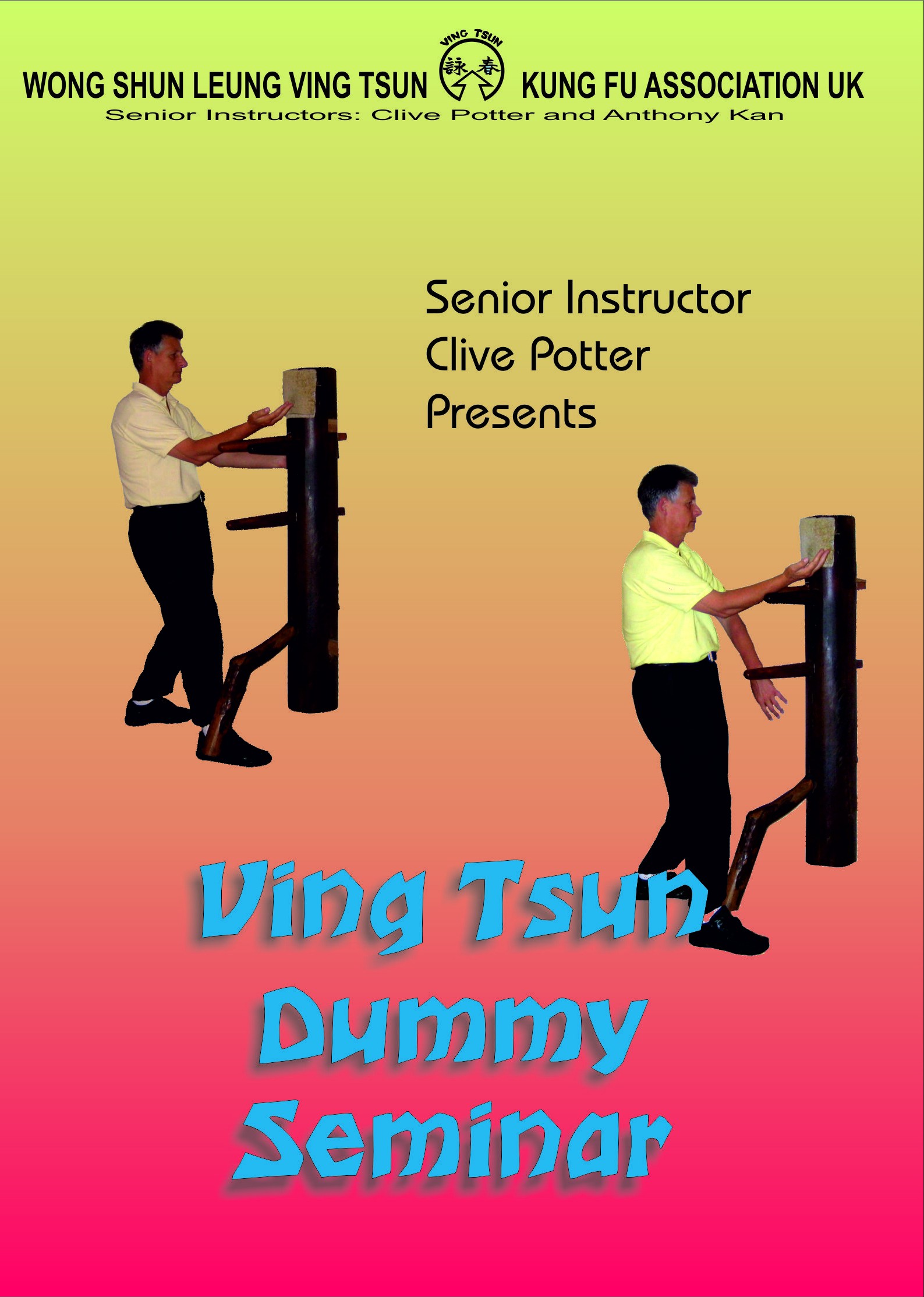
Review – Clive Potter’s Ving Tsun Dummy Seminar DVD

What It’s About:

This DVD is a presentation of the basic attributes of Wooden Dummy training and its application in Wing Chun Kung-fu techniques.

Comments:
Novice usually don’t appreciate the benefit of Wooden Dummy training and at times regard it as merely a way to toughen up the arms and akin to that of hitting a tree of sorts and could serve the same purpose…the practice of Chao Sao or the “banging of arms” would perhaps make one feel that it would also provide the same benefit in Wooden Dummy practice. But, this notion is far from the truth.

Categories
Product Reviews (Customer)

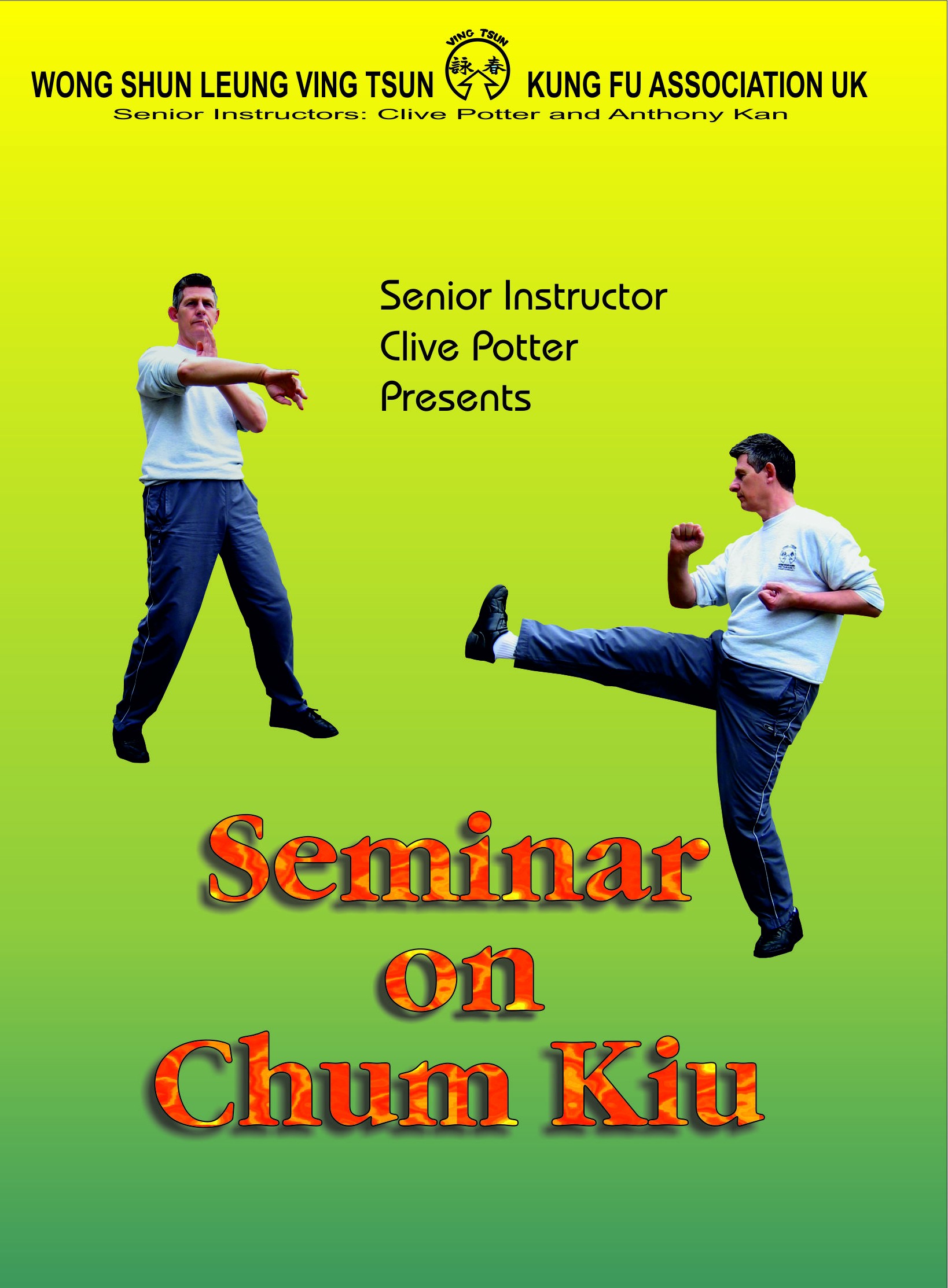
Review – Clive Potter’s Seminar on Chum Kiu DVD

What It’s About:

Seminar presented by Clive Potter, on the essential training aspects of Wing Chun’s second form Chum Kiu.

Comments:
If you purchased the first volume of the Clive Potter Wing Chun DVD on Siu Lin Tao, you can pretty much expect the same style of presentation…complete with blackboard diagrams. In his introductory comments he said that Siu Lin Tao is primarily for training your stance…I disagree, but everyone is entitled to their own opinion. Although he is correct about Chum Kiu’s primary purpose; that is it allows one to learn how to bridge the gap. The gap of course is that distance between you and your opponent…this is particularly obvious when your opponent moves and changes position, one naturally needs to move in a way to close the gap, if one desires to use a technique.